Music Master, Machine: Negotiating Pedagogical Authority in Francesco Geminiani’s Guida Armonica (1756)
The Guida Armonica (1756) is a composing machine in book form: follow its chains of short passages and you can assemble your own music. Geminiani hoped it would bring the richness of sixteenth-century counterpoint back into eighteenth-century harmony.
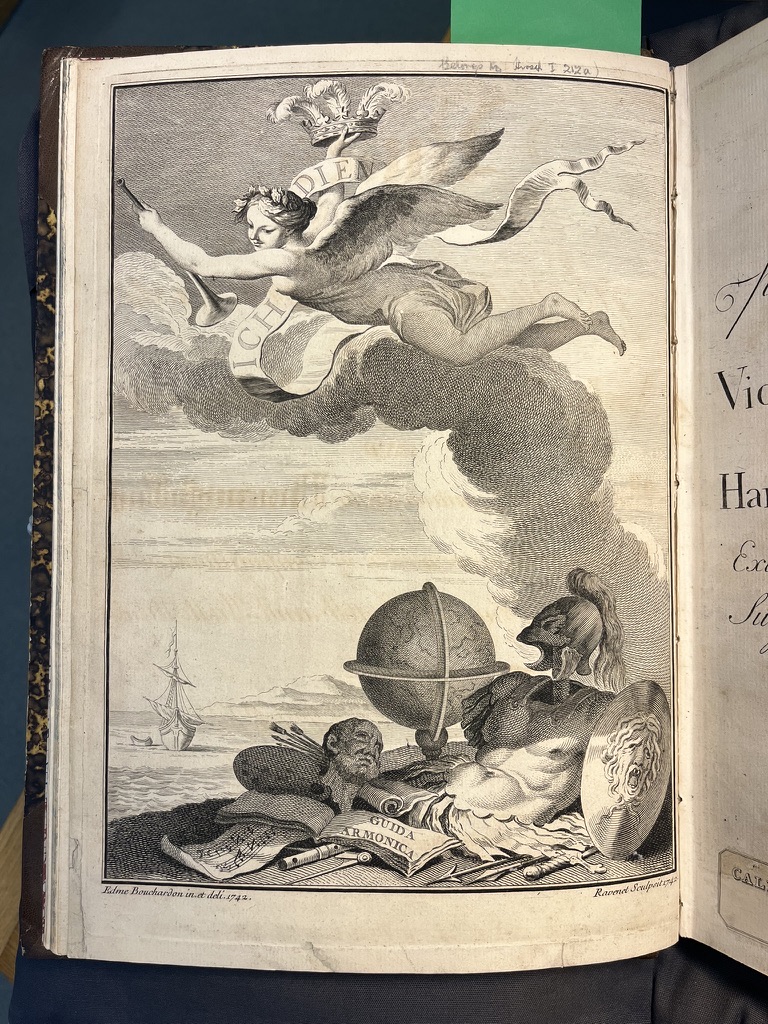 The engraved frontispiece to Geminiani’s A Treatise of Good Taste in the Art of Musick (1749), showing the Guida in the foreground.
I read it in light of Geminiani's precarious position as an Italian immigrant and celebrity teacher in London, and as an early version of a question we're still arguing about: when a system writes the music, who is the composer?
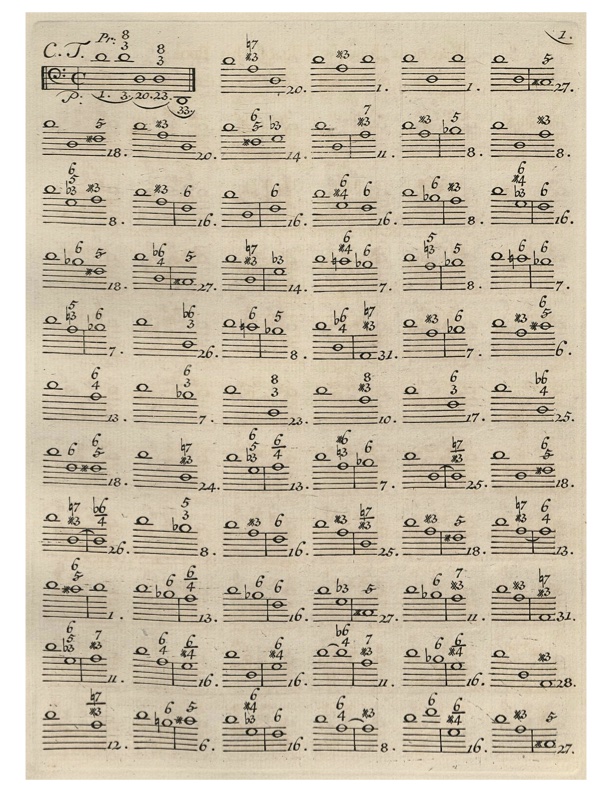 The first page of the Guida Armonica
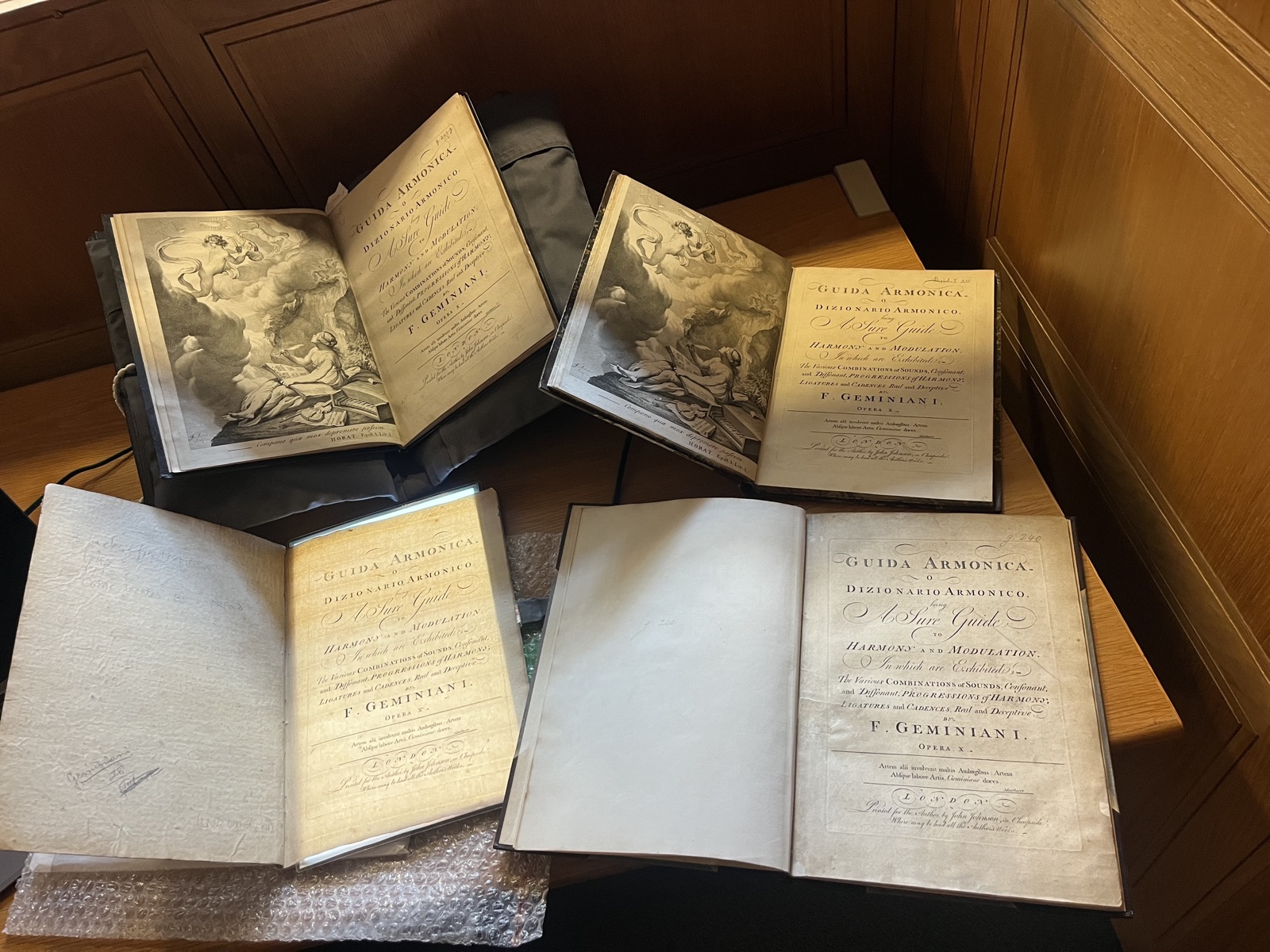 Four copies of the Guida Armonica, taken in the British Library.